Product Code: RC‑Tryp‑017
Chemical Name: 4‑Acetoxy‑N‑methyltryptamine Fumarate
CAS Registry Number: 246-87-2
Molecular Formula: C₁₃H₁₆N₂O₂ · C₄H₄O₄
Molecular Weight: 350.34 g/mol
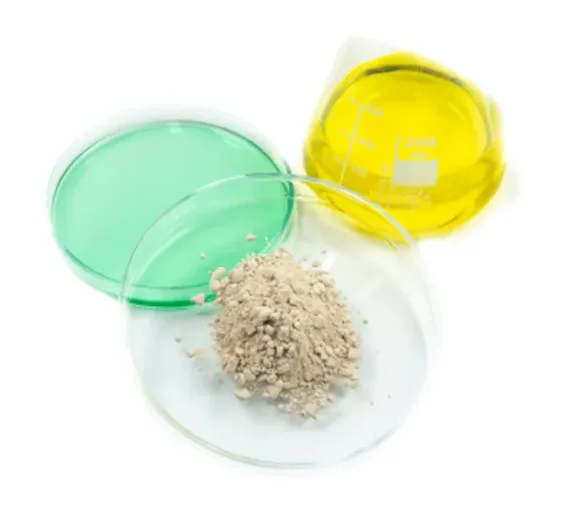
Form: Fine white crystalline powder
Purity: ≥99% — independently verified by proton nuclear magnetic resonance (¹H‑NMR) spectroscopy and high‑performance liquid chromatography (HPLC)
Solubility: Freely soluble in water; soluble in methanol and polar organic solvents
Storage Recommendation: Store in a cool, dry environment away from direct light; maintain temperature below 20°C; use airtight, chemically inert containers to preserve integrity
Shelf Life: Minimum 24 months under recommended storage conditions
Quality Assurance: Every batch includes full analytical documentation including NMR spectra, HPLC chromatograms, and certificate of analysis (CoA)
Introduction
4‑AcO‑MET Fumarate represents a high‑purity, analytically certified tryptamine derivative intended exclusively for controlled laboratory investigation, scientific research, and analytical reference applications. This compound is the fumarate salt form of 4‑acetoxy‑N‑methyltryptamine — a structurally distinct member of the substituted tryptamine class, featuring an acetoxy functional group at the 4‑position of the indole ring system and N‑methylation on the ethylamine side chain.
As a research‑grade chemical, 4‑AcO‑MET Fumarate has been synthesized and refined to meet exacting quality benchmarks, ensuring composition consistency, structural confirmation, and verified purity suitable for rigorous scientific inquiry. The fumarate salt formulation has been selected for its superior physicochemical properties — notably enhanced aqueous solubility, improved crystalline stability, extended shelf life, and resistance to degradation compared to the corresponding freebase form. These characteristics make this product particularly valuable for researchers requiring reliable, reproducible material across multiple experimental series, analytical protocols, and in vitro study designs.
This product is not a commodity, consumable, or consumer product. It is a specialized research chemical supplied solely to qualified researchers, institutions, and laboratories holding appropriate authorization and permits. It is not intended, marketed, or approved for human consumption, ingestion, or any form of in‑vivo administration. All purchasers are required to familiarize themselves with and fully comply with all applicable local, national, and international laws and regulations governing the possession, handling, storage, and use of tryptamine compounds and research chemicals generally.
Chemical Composition and Structural Characteristics
4‑AcO‑MET Fumarate is a composite molecular system comprising the active tryptamine base — 4‑acetoxy‑N‑methyltryptamine — ionically complexed with fumaric acid in a 1:1 stoichiometric ratio to form a stable crystalline salt. The tryptamine core consists of a bicyclic indole aromatic ring fused to an ethylamine aliphatic side chain, with specific substitution patterns that define its chemical profile and distinguish it from related tryptamine derivatives.
At the 4‑position of the indole ring, an acetoxy group (–OCOCH₃) is attached — a modification that serves as a pro‑moiety potentially subject to enzymatic or hydrolytic cleavage under defined experimental conditions, yielding the corresponding hydroxyl derivative. The terminal amine of the ethylamine side chain carries a single methyl substituent, distinguishing this compound from both its dimethylated homologues and primary amine analogues.
The fumarate counterion — derived from trans‑butenedioic acid — confers several critical advantages essential to laboratory use. Unlike hydrochloride or sulfate salts that may exhibit hygroscopic tendencies or pH instability, fumarate forms a neutral, non‑hygroscopic crystalline lattice that resists moisture absorption and maintains structural integrity over time. The counterion itself is biologically endogenous and chemically inert under normal experimental conditions, meaning it does not introduce confounding biological activity or interfere with most analytical detection methods.
Every batch is subjected to dual‑method verification: proton NMR confirms molecular structure and absence of structural isomers or precursor residuals; HPLC establishes quantitative purity ≥99% and identifies trace impurities at levels below detection thresholds typical of lower‑grade material. This dual‑validation approach ensures researchers receive material whose composition is known, documented, and reproducible across orders.
Quality Specifications and Manufacturing Standards
Quality is the foundational principle of this product. 4‑AcO‑MET Fumarate is synthesized, purified, and characterized in compliance with rigorous research‑chemical quality control standards designed to meet or exceed institutional laboratory requirements. The manufacturing process proceeds through multiple stages of synthesis, refinement, recrystallization, and analytical validation — with intermediate quality checks eliminating material deviating from specification before reaching final packaging.
The final product meets or exceeds the following uniform specifications across every batch:
- Identity Confirmation: Positive structural match via ¹H‑NMR spectroscopy
- Purity: ≥99% by area normalization via HPLC at 254 nm detection wavelength
- Appearance: Uniform fine white crystalline powder free from discoloration, clumping, or visible inclusions
- Solubility: Clear, colorless solution achieved at 10 mg/mL in distilled water with no visible residue or turbidity
- Loss on Drying: ≤0.5% moisture content confirming effective drying and low hygroscopicity
- Residual Solvents: Below limits established for laboratory chemicals — no detectable synthesis solvents
- Heavy Metals: Below 10 ppm for lead, arsenic, mercury, and cadmium
- Total Impurities: No single impurity exceeding 0.5% as determined by HPLC
A comprehensive Certificate of Analysis accompanies each shipment, summarizing all test results, batch‑specific NMR and HPLC data, production date, retest date, and storage guidance. This documentation allows researchers to maintain full audit trails, meet institutional record‑keeping requirements, and reference verified material characteristics in published methodology sections.
Formulation Advantages — Why Fumarate Matters
The decision to supply 4‑AcO‑MET specifically as the fumarate salt is based on well‑established physicochemical principles directly relevant to laboratory utility. Many tryptamine freebase forms are oils, gums, or semi‑solids that are difficult to measure accurately, degrade rapidly upon exposure to air or moisture, and exhibit poor water solubility — requiring organic solvents that may interfere with biological assays or introduce experimental variability.
Conversion to the fumarate salt resolves these limitations comprehensively:
- Stability: The crystalline fumarate lattice significantly slows oxidative degradation and hydrolysis. Material retains certified purity for months or years when stored appropriately — reducing experimental variability caused by aging or decomposition.
- Solubility: Rapid, complete dissolution in neutral aqueous solutions eliminates the need for aggressive solubilizers that may alter assay conditions or introduce confounding variables.
- Handling: Dry, free‑flowing crystalline powder allows precise gravimetric measurement, accurate serial dilution, and uniform solution preparation — foundational requirements for reproducible science.
- Consistency: Uniform crystal formation ensures homogeneous composition throughout the batch; material from the top of a container is identical to material from the bottom.
- Detectability: The fumarate counterion does not absorb UV light at wavelengths commonly used in HPLC or spectrophotometry, nor does it interfere with mass spectrometry ionization — meaning the tryptamine molecule can be detected, quantified, and tracked without interference from its salt form.
In short, the fumarate formulation removes unnecessary technical obstacles, allowing researchers to focus on experimental design and observation rather than material stabilization and solubility challenges.
Research Applications and Scientific Relevance
4‑AcO‑MET Fumarate occupies a valuable niche within tryptamine research due to its unique structural profile and predictable physicochemical behavior. While the compound is not intended for human study, its structural relationships make it a compelling subject across several areas of fundamental and applied scientific inquiry.
Analytical Chemistry and Reference Standard Development: With confirmed structure and verified purity, this compound serves as an analytical reference standard for the development and validation of detection methodologies. Researchers in forensic chemistry, clinical toxicology, and environmental monitoring utilize it to establish retention times, mass‑spectrometric fragmentation patterns, and spectroscopic signatures — creating reference libraries that improve identification accuracy across laboratories.
Structure‑Activity Relationship (SAR) Studies: By comparing the behavior of 4‑AcO‑MET against related compounds — such as MET, 4‑HO‑MET, and other substituted tryptamines — researchers can systematically map how specific structural modifications (acetoxylation, N‑methylation, ring position) influence molecular properties, receptor binding, and metabolic stability. Such comparative work advances fundamental understanding of indole alkaloid pharmacology and guides rational design of future research tools.
Metabolic and Biotransformation Investigations: The acetoxy group represents a biolabile pro‑moiety potentially cleaved by ubiquitous esterase enzymes found in biological matrices. This characteristic makes 4‑AcO‑MET valuable for studying metabolic conversion rates, identifying resulting metabolites, and distinguishing precursor compounds from their metabolic products — research that improves interpretation of analytical results and clarifies compound behavior under physiological conditions.
In Vitro Receptor Binding and Signal Transduction: 4‑AcO‑MET serves as a research ligand for investigating serotonergic receptor interactions, transporter binding affinities, and downstream signaling pathways. Understanding how substituted
tryptamines interact with specific receptor subtypes contributes to neuroscience, molecular pharmacology, and potentially future therapeutic development — provided such studies remain within authorized institutional frameworks.
Crystallography and Molecular Modeling: The fumarate salt’s crystalline suitability enables X‑ray diffraction studies and computational molecular modeling — yielding precise three‑dimensional structural data that refine binding models and improve predictive pharmacology.
It is critical to emphasize that all research applications must be conducted within institutional ethical frameworks, biosafety protocols, and applicable regulatory environments. This compound is designed for controlled laboratory investigation — not for observation in living subjects.
Handling, Storage, and Laboratory Best Practices
Appropriate handling and storage preserve product integrity, protect laboratory personnel, and ensure regulatory compliance. All individuals working with this compound should possess current knowledge of tryptamine chemistry, laboratory safety protocols, and institutional policies regarding controlled or restricted research substances.
Personal Protective Equipment (PPE): Standard laboratory attire including nitrile or butyl rubber gloves, safety eyewear with side shields, and a fully buttoned laboratory coat is required. Work should proceed within a properly functioning fume hood or designated chemical safety enclosure to prevent inhalation, skin contact, or environmental release. Avoid creating dust or aerosols; prepare stock solutions immediately after weighing to minimize airborne exposure risk.
Storage Conditions: Store in original packaging or chemically equivalent amber glass with PTFE‑lined sealing. Maintain at controlled room temperature or under refrigeration; protect from direct sunlight, ultraviolet radiation, and oxidizing agents. Fumarate salts are generally non‑hygroscopic, but consistent low‑humidity storage (relative humidity <60%) remains best practice. Always secure storage areas with access restricted to authorized personnel only.
Waste Disposal: Dispose of all solutions, residuals, and contaminated materials in accordance with institutional hazardous waste protocols and national environmental regulations. Do not release into drains, water systems, or general waste streams. Neutralize and deactivate tryptamine solutions chemically before disposal where protocols require — document disposal activities for regulatory audit purposes.
Inventory and Security: Maintain accurate records of receipt, usage, remaining quantity, and disposal. Secure against unauthorized access. Many jurisdictions regulate tryptamine compounds by structure or analogue status — maintain current inventory records and be prepared to demonstrate legitimate research purpose if requested by authorities.
Regulatory Status and Compliance Guidelines
4‑AcO‑MET Fumarate is a tryptamine derivative — a structural analogue of compounds controlled under international drug control conventions and national legislation. While specific scheduling varies by country, tryptamine compounds are frequently regulated by structural classification rather than exclusive listing. This means that even if a compound is not explicitly named in legislation, its structural similarity to scheduled substances may bring it within the scope of controlled substance, analogue, or psychoactive substance laws.
United States: Tryptamine analogues may fall under the Federal Analogue Act. Possession, importation, or distribution without appropriate DEA scheduling and institutional authorization may constitute a federal offense.
European Union: National laws vary — many member states (including Germany, France, Sweden, and others) enforce generic bans covering entire classes of tryptamine structures regardless of specific naming. The Netherlands maintains more permissive frameworks for research chemicals, but interpretation and enforcement remain subject to change.
United Kingdom: Psychoactive Substances Act applies broadly — supply for purposes other than legitimate scientific research is restricted.
Australia: TGA Poisons Standard classifies numerous tryptamine structures as Schedule 9 (Prohibited Substances). Import requires a research permit; unauthorized import is a serious offense.
Canada: Specific tryptamines are scheduled; novel derivatives may currently fall outside explicit scheduling but remain subject to change and international treaty obligations.
Every purchaser is legally and fully responsible for verifying — before ordering — that possession, importation, and use of this compound are authorized within their specific jurisdiction and institutional setting. This product is supplied under the explicit condition that it will be used solely for legitimate, licensed institutional research and not diverted, redistributed, or utilized in any unauthorized manner.
Ordering Information and Quality Assurance Commitment
4‑AcO‑MET Fumarate is available in standard laboratory quantities ranging from 100 mg up to bulk gram volumes, with packaging designed to preserve product integrity during transit and storage. All units are double‑sealed in tamper‑evident, light‑resistant packaging accompanied by a batch‑specific Certificate of Analysis, NMR spectrum summary, HPLC chromatogram, and applicable safety data sheets (SDS).
Our quality assurance program operates on the principle of reproducibility: identical synthesis routes, purification methods, and analytical protocols apply across all production runs. Material from Batch A is compositionally indistinguishable from material from Batch B within analytical tolerance — ensuring that research results remain comparable and verifiable over time.
Should any unit fail to meet published specifications, we offer full replacement or credit upon return and independent verification of the discrepancy. Our commitment extends to supplying consistent, well‑characterized material — not to authorizing or enabling unauthorized use.


 Tryptamines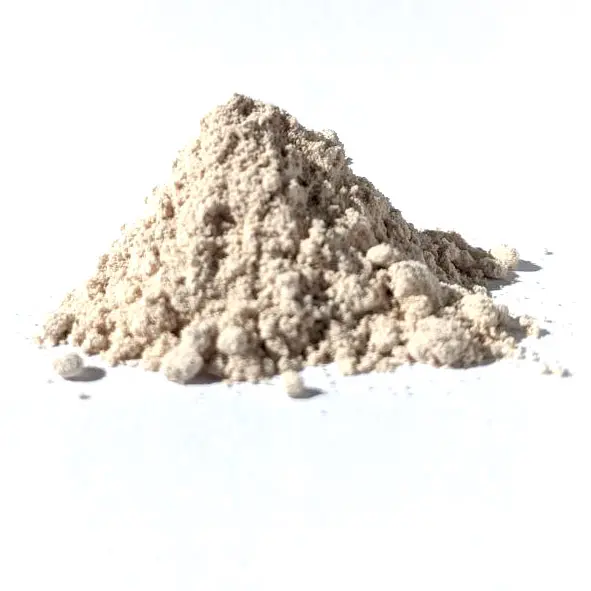








Reviews
There are no reviews yet.